Project Success: Optimizing Classroom Air Purification with Measurements and CFD Simulations
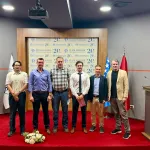
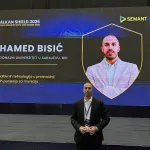
The project “Optimization of Air Purification Technologies in Classrooms through Measurements and CFD Simulations” was successfully implemented by Prof. Dr. Muhamed Hadžiabdić at the International University of Sarajevo (IUS). The project was realized within the R&D grant scheme, jointly financed by the Federal Ministry of Education and Science and the United Nations Development Programme (UNDP) through the projects “Better Governance for Faster Economic Growth (EGG2)” - funded by the Government of the Kingdom of Norway - and “Translating the Framework for the Implementation of Sustainable Development Goals in BiH into Sustainable and Inclusive Growth (SDG2BiH),” funded by Sweden.
This project focused on improving indoor air quality in classrooms, particularly during the fall and winter months when pollution levels are highest in urban areas of Bosnia and Herzegovina. Children are especially vulnerable to air pollution because they breathe faster than adults and often through their mouths, increasing their intake of harmful particles. Since they spend much of their day in classrooms, air quality directly affects their health, concentration, and ability to learn. Ensuring clean and fresh air in schools is therefore an essential investment in the well-being and development of children.
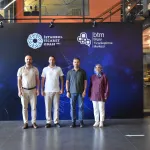
Using PM2.5 sensors and Computational Fluid Dynamics (CFD) simulations, the project team - comprising IUS students, local and international experts, and industry partners ENOVA d.o.o. and InventoPro d.o.o. - tested various configurations of air purifiers in typical classroom environments. Results showed that classrooms require at least two purifiers for effective performance, while three purifiers provide the most efficient results, achieving almost complete air purification in less than two hours during high-pollution episodes. The findings provide practical recommendations for enhancing air quality in schools and other public buildings.
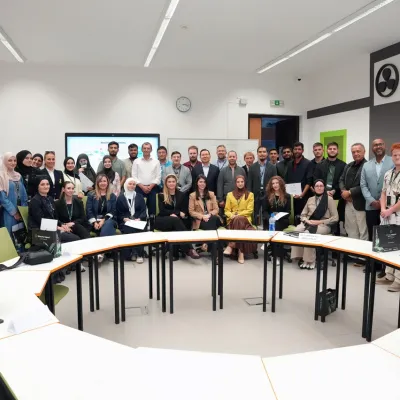
The International University of Sarajevo expresses its sincere gratitude to the Federal Ministry of Education and Science, UNDP, and all partners for their continuous support. Special recognition goes to the dedicated project team, whose professionalism, innovation, and hard work were essential to the project’s success. Their efforts exemplify the power of collaborative research in addressing real-world challenges.
With this project continues, IUS continues its strong commitment to conducting research that benefits society at large, advancing knowledge that contributes to healthier, more sustainable communities across Bosnia and Herzegovina. For more details on the project results, see the brochure: “Čistiji zrak za bolje učenje – Healthier Air for Better Learning.”